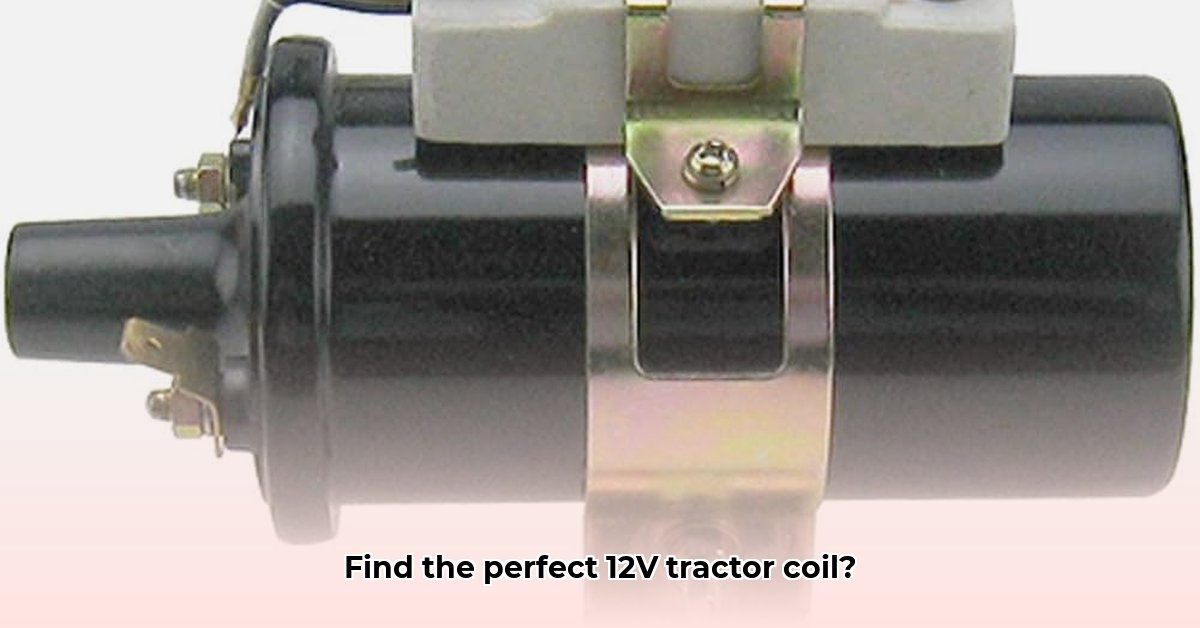
Getting your tractor's ignition system up and running smoothly relies heavily on a functioning 12-volt coil. Choosing the right one can save you time, money, and frustration; selecting the wrong one can lead to costly repairs and downtime. This comprehensive guide will walk you through selecting, installing, and troubleshooting your 12-volt tractor coil, regardless of your mechanical expertise. We'll cover everything from identifying your tractor's specific needs to understanding the differences between various coil types and installing them safely and effectively.
Understanding Your Tractor's Ignition System: Specificity is Key
Before purchasing a new coil, determining your tractor's exact requirements is paramount. Think of it like selecting the right-sized wrench – using the wrong one won't just be ineffective, it could cause damage. Your tractor's ignition system demands the same precision.
First, gather the necessary information:
- Voltage Verification: Confirm your tractor runs on a 12-volt system. (Crucial – a 12-volt coil is incompatible with a 6-volt system). Check your owner's manual.
- Resistance Measurement: Most standard 12-volt tractor coils exhibit a resistance of approximately 3 ohms. High-performance coils, however, often have significantly lower resistance, around 0.6 ohms. This information is usually printed on the coil itself or found in your owner’s manual.
- Mounting Orientation: Observe how the old coil is mounted. Is it vertical or horizontal? This impacts the coil's design and cooling mechanism. Oil-filled coils are typically mounted vertically; epoxy-filled coils are usually horizontal. Document this carefully with photos.
- Part Number Identification: If possible, locate the part number on the old coil. This is the most reliable method for finding an exact replacement. Be aware, however, that cross-referencing part numbers between brands can be complex. The tractor's manual remains the ultimate source of truth.
The following table summarizes common coil characteristics, although your specific tractor may vary:
| Voltage | Resistance (Ohms) | Mounting Style | Filling Type | Notes |
|---|---|---|---|---|
| 12V | 3.0 | Vertical | Oil | Standard coil |
| 12V | 3.0 | Horizontal | Epoxy | Standard coil |
| 12V | 0.6 | Vertical | Oil | High-performance coil |
| 12V | 2.5 | Vertical | Oil | Some models; always verify with your manual |
Always consult your tractor's manual for precise specifications. It's the definitive source of information for your tractor's unique needs. Don't skip this step!
Selecting the Optimal 12-Volt Coil: OEM vs. Aftermarket Choices
With your tractor's specifications in hand, you can choose a replacement coil. Two primary options exist:
- OEM (Original Equipment Manufacturer): These coils are manufactured by the same company that built your tractor. They offer a guaranteed fit and functionality but are usually more expensive.
- Aftermarket Coils: Various suppliers offer these coils, generally at lower prices than OEM options. While often performing equally well, meticulous verification of compatibility with your specific tractor model is essential.
Considering a high-performance coil? These offer notable benefits:
Advantages of High-Performance Coils:
- Increased Spark Power: This translates to more reliable fuel ignition.
- Potential Fuel Efficiency Gains: A stronger, consistent spark leads to more complete combustion, potentially improving fuel economy.
- Enhanced Engine Performance: A more powerful spark results in smoother engine operation and quicker starting.
Disadvantages of High-Performance Coils:
- Higher Purchase Price: High-performance coils are typically more costly than standard replacements.
Carefully evaluate these pros and cons. A standard replacement might suffice, whereas a high-performance coil may be a worthwhile investment if you prioritize enhanced performance.
Installing Your New Coil: A Guided, Step-by-Step Process
Safety is paramount when working with electrical systems. Always disconnect your tractor's negative battery terminal before beginning any work.
Step-by-Step Installation:
- Preparation: Gather necessary tools (screwdrivers, wrenches, etc.), consult your tractor's manual, and take detailed photos of the old coil's wiring connections before disconnecting anything. These photos serve as a crucial visual reference during reassembly.
- Old Coil Removal: Carefully detach the wires from the old coil, noting their precise locations. Photos are highly recommended. Remove the coil from its mounting bracket, paying close attention to its orientation.
- New Coil Installation: Mount the new coil, ensuring it's oriented identically to the old coil. Mounting holes should align perfectly; forcing the coil could cause damage.
- Wiring: Connect the wires to the new coil precisely as they were connected to the old coil, referring to your notes and photos. Double-check all connections meticulously to prevent electrical issues. A wiring diagram from your tractor's manual will help.
- Testing: Reconnect the negative battery terminal. Start the tractor's engine. If it runs normally, the installation is successful. If not, you'll need to troubleshoot the issue (see next section).
If you feel uncomfortable performing these steps, consulting a qualified mechanic is recommended.
Troubleshooting Common Coil Problems: Identifying and Resolving Issues
Even with careful installation, problems can occur. Here’s how to address common difficulties:
- No Spark: If the engine doesn't even attempt to turn over, systematically check your wiring connections, the coil itself, and the battery. Use a multimeter (with the battery disconnected) to test the coil's resistance and ensure it's receiving power.
- Weak Spark: If the engine cranks but starts poorly or runs roughly, suspect a problem with the coil, spark plugs, or other ignition system components. Begin by inspecting and replacing the spark plugs, as necessary.
- Intermittent Spark: If the engine starts sometimes but not others, look for loose or corroded wiring connections. Ensure all connections are clean and firmly secured.
If problems persist, seek assistance from a qualified mechanic. A faulty coil can cause substantial engine damage.
Remember, this guide offers general advice. Always consult your tractor's manual for specific instructions and safety precautions. Your manual is the ultimate authority on your tractor's individual needs. This guide provides a general framework but remember every tractor is unique.